Your system asks for reduced motion, so the tactics board is shown paused. Press play if you want to watch it.
BOM Lab · 2026/27 season
We don't train players. We develop defenders, midfielders, forwards and goalkeepers.
Position-specific training for players aged 8 to 15. Each player trains for 1 h 30 min in their own position, in a small group of 5 with its own coach.
SundaysAges 8 to 15Colegio Highlands, BoadillaFrom 22 November
The programme in figures
Each group5 childrenand one coach who stays with the group
Each session20 childrenin 4 groups at once, by position
Each Sunday2 sessionsof 1 h 30 min, from 10:00 to 13:00
Each day40 childrentrain on the Highlands pitch
Five principles
This is not generic training with a ball somewhere in the background. Every drill answers a real demand of the position and always follows the same logic.
Specificity
Every drill answers a real demand of the position, not generic work.
Progression
From simple to complex: unopposed, passive opposition, live opposition and match play.
Understanding
The coach asks before correcting: what did you see? What other option did you have?
Individualisation
Each player has two or three targets of their own, which are recalled at every session.
Safety and load
Hydration, warm-up and control of jumps, falls and effort according to age.
The coach asks before correcting.
Four positions, four training sessions
Groups are formed by position and, within each position, by similar age and level. With five children per coach, everyone takes part equally and can receive individual advice.
01 · DF
Defenders: centre-backs and full-backs
Protecting space and the goal with smart decisions: defending one v one without diving in, anticipating, covering a team-mate and starting play with quality under pressure.
Technique
Body shape and footwork when defending: side-on stance with the weight on the front of the foot
Short and medium passing with both feet, and carrying the ball to break lines
Directed clearances and aerial play
Game situations
Delaying and cover: who steps out, who covers and at what distance
Defensive line: stepping up, dropping and holding
Playing out from the back with the goalkeeper's support, and defending crosses
01 Look02 Decide03 Execute
02 · MC
Midfielders: holding, central and attacking midfielders
Seeing before receiving, opening the body towards free space and linking the lines with passing and quick decisions under pressure.
Technique
Directional control and a first touch into space
Short and medium passing with both feet, and line-breaking passes
Dribbling with the head up and shooting from distance
Game situations
Occupying the spaces between the lines and offering passing angles
Third-man combinations, switches of play and lay-offs
Pressing for the five seconds after losing the ball
01 Look02 Decide03 Execute
03 · DC
Forwards: centre-forwards and wingers
Attacking space, getting the body right when receiving and finishing with variety and composure, even after a miss.
Technique
A first touch that sets up the shot, and shielding the ball with back to goal
Finishing with the inside, instep and outside of the foot, and heading
Dribbling in the one v one and lay-off passes
Game situations
Runs to feet and runs in behind
Attacking the near and far post with diagonal movements
One-twos and pressing after losing the ball
01 Look02 Decide03 Execute
04 · POR
Goalkeepers: the specialist in goal
Commanding the area, anticipating with good footwork and taking part in the build-up, with good communication and mental recovery after conceding.
Technique
Set position, movement and catching low, mid-height and high balls
Parrying, diving and rolling, and coming out for high balls
Footwork, and distribution by hand and by foot
Game situations
Positioning in relation to the ball and the defensive line
One v one: when to come out and when to narrow the angle
Dealing with crosses and taking part in the build-up
01 Look02 Decide03 Execute
How the day works
One session of 1 h 30 min in your position. 40 children train each day.
With 20 children per session there are four groups of 5: defenders, midfielders, forwards and goalkeepers, each with its own coach.
The 4 coaches each take one position, stay with their group and repeat with the children in the second session. The zones are marked with cones.
Position · coach
Session 1 · 10:00–11:30
Session 2 · 11:30–13:00
DF · Coach 1 · centre-backs and full-backs
5 children
another 5 children
MC · Coach 2 · holding and central midfielders
5 children
another 5 children
DC · Coach 3 · forwards and wingers
5 children
another 5 children
POR · Coach 4 · goalkeepers
5 children
another 5 children
Total per session
20 children · 4 coaches
20 children · 4 coaches
The 90 minutes of each session
Six phases. The four positions work at the same time at different stations and come together at the end to take what they have trained into a game.
10'0–10
Activation and perception
All together. Mobility, coordination and activation with the ball, with visual cues so players perceive before they act.
20'10–30
Specific technique by station
Four stations. Technical tasks for the position with quality repetitions and immediate correction, first unopposed and then against passive opposition.
25'30–55
Individual tactics with opposition
Four stations. Situations from the position with live opposition and individual correction through questions.
20'55–75
A measurable individual challenge
By station. A short, repeatable test: one v ones won, directional controls, goals from ten attempts, clean catches. The result is recorded.
10'75–85
Transfer to the real game
Playing together. Small-sided situations where the work is applied, with rules that reward the behaviour of each position.
5'85–90
Feedback and personal target
In a circle. Each player says what they have improved and what they will work on next session; the coach closes with a key message.
Quality commitment
More than 60 of the 90 minutes are effective work. One coach for every five players. Everyone has a ball in most tasks, with no long queues.
Rules of the final game
MCExtra point for a pass that comes after scanning.
DFExtra point for defending the one v one without diving in.
DCExtra point for a shot that follows a run in behind.
PORExtra point for coming out at the right time in the one v one.
Behaviours are rewarded; mistakes are not punished.
Each player is compared with themselves
There is no ranking and no comparison between children. What is measured is each player's progress from their own starting point.
First sessionInitial assessment
Two or three personal targets are set for each player.
Every sessionA measurable challenge
A short test at each station. The result is recorded so it can be compared.
Every six weeksReport to the family
Individual progress and targets for the next period.
Dedicated daysFull tests
On set days, so that no training time is lost.
Safety and load
What we do so that Sunday adds up and doesn't take its toll.
A warm-up at every session and hydration breaks between blocks. In hot weather, more breaks and lower intensity.
Jumps, sprints and duels are dosed according to age and to the player's load of matches and training with their team.
First-aid kit on the pitch and an injury protocol. The coach does not diagnose: players are referred to the medical service.
On enrolment, the family confirms that the player is fit for physical activity.
Sunday, step by step
Three hours organised to the minute. The sessions run back to back, with no break: the 15 minutes of activation in session 2 give everyone time to arrive.
09:45Session 1 children arrive: attendance and bibs.
10:00–11:30Session 1 · four groups: DF, MC, DC and POR.
11:20Session 2 children arrive. The organisers receive them separately, with bibs.
11:30–13:00Session 2 · the same four groups, with other children.
13:00–13:15Handover to families and equipment collected.
Who is on the pitch
A fixed rule: one coach per group at all times and one organiser free to deal with anything that comes up.
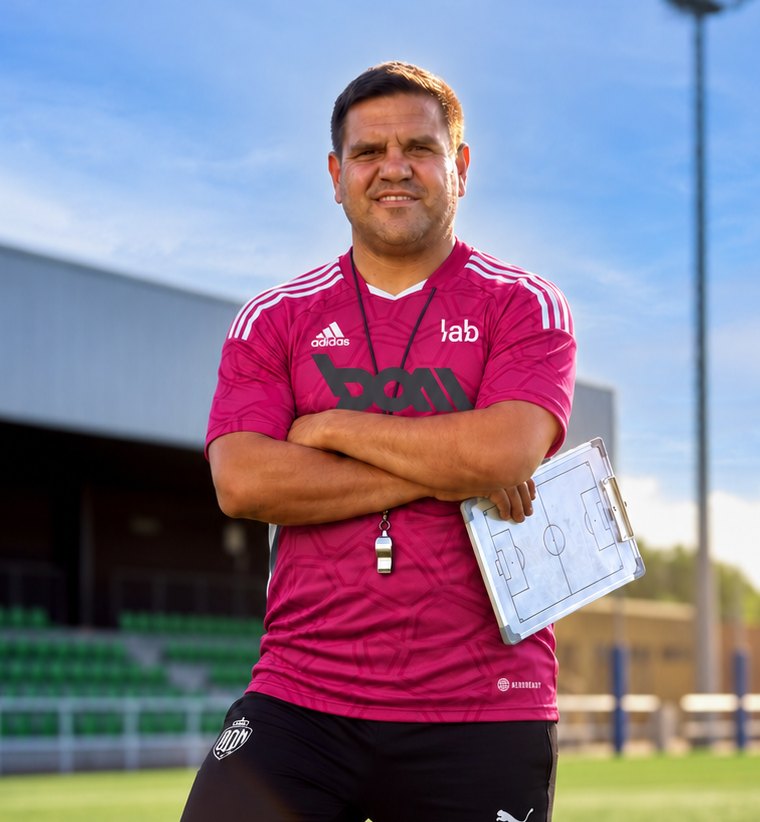
ORGANISERDiego Bogao
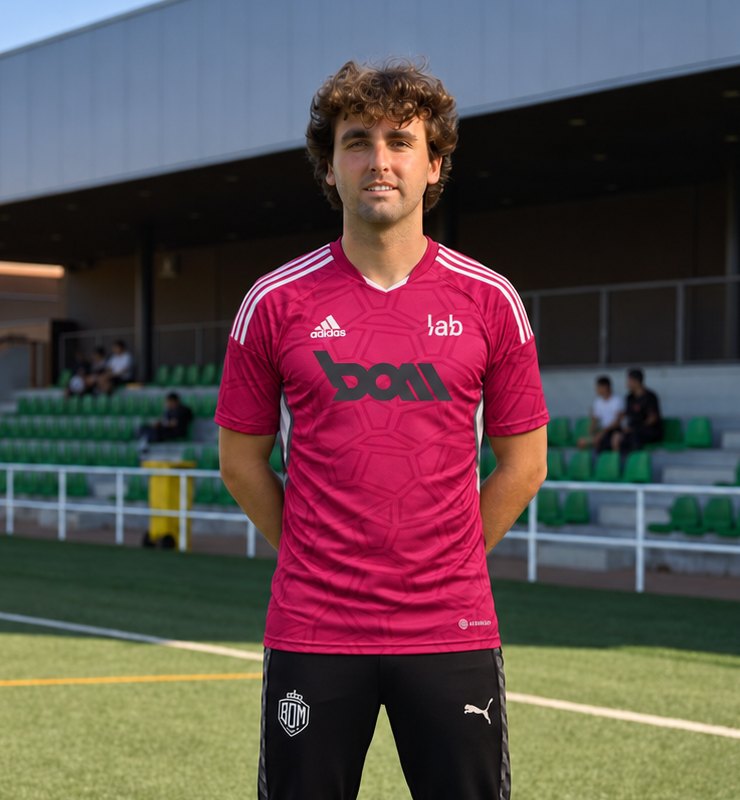
ORGANISERAlejandro Rojas
4 coaches
One per position. Each leads their group in both sessions, arrives 30 minutes early and records every child's results.
2 organisers
Reception and attendance, session changeover, equipment, water, first-aid kit and communication with families.
Programme equipment
Per group: 6 balls, 12 cones, 6 bibs and water. Shared: 2 mini goals, first-aid kit, whistles and stopwatch.
One fee, everything included
There is a single monthly fee, with a fixed session every Sunday, and it covers everything the player needs.
Training, ages 8 to 15
€179per month
Four sessions of an hour and a half per month, with training by position and groups matched by age and level.
An individual report every six weeks, with personalised targets.
First consultations
30'
Nutritionist, with the family.
30'
Sports psychologist.
At every sessionHealthy habits
Education in healthy habits, built into the sessions.
Terms
No registration feeThe place is confirmed with payment of the first monthly fee.
Payment in advanceIn the first days of the month, by direct debit or bank transfer.
AbsencesWith 24 hours' notice, they can be made up in the other session on a Sunday of the same month, if there is a place.
Cancelled sessionIf the club or the weather cancels it, it is made up on an agreed date or deducted from the following month.
LeavingNotice must be given before the 25th of the previous month.
Not included
Follow-up consultations and psychology or nutrition workshops are booked separately, at an extra charge.
Your place in three steps
1
Fill in the player's formDetails, usual position, health, two contact phone numbers and the authorisations.
2
Pay the first monthly fee by direct debit or transferYou receive a confirmation email with the payment details. Once paid, the place is confirmed.
3
The first Sunday, 15 minutes before your sessionAttendance, bib and off to your group. The initial assessment takes place in that session. Notices to families are sent through the programme's WhatsApp and Instagram.
22 November
First BOM Lab session. 20 places per session, 40 every Sunday. Groups of 5, by position, age and level, with no more than a year's difference.